
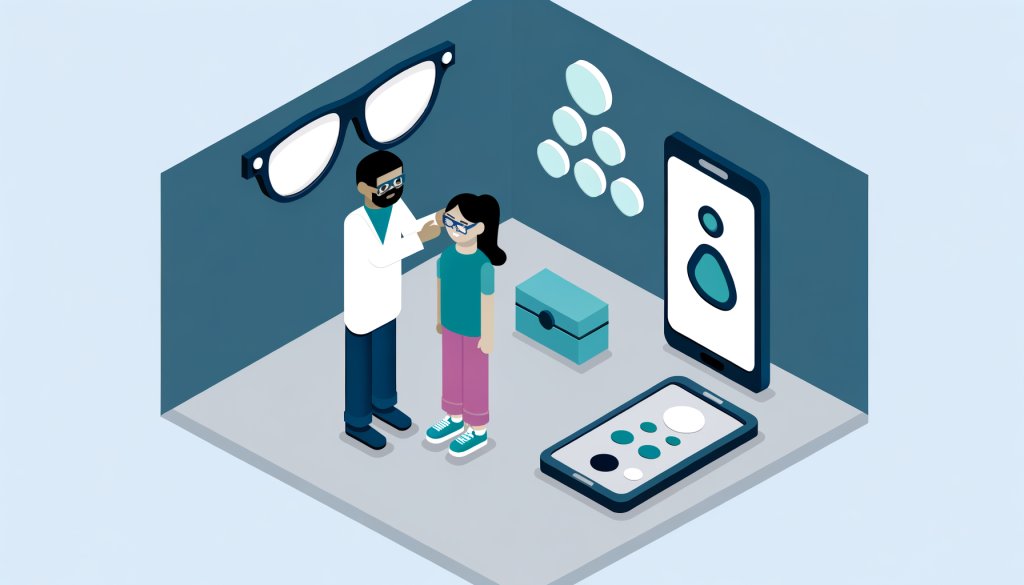
Myopia Management in Toronto: How Orthokeratology, Specialty Lenses, and Treatment Plans Slow Childhood Nearsightedness
Myopia, or nearsightedness, has become an increasingly common vision concern among children and adolescents. In urban centres like Toronto, where children often combine extensive near work with limited outdoor time, proactive myopia management in Toronto is growing in importance. This article explains the science behind myopia progression, clinical options such as orthokeratology and specialty contact lenses, how individualized treatment plans are designed, and practical considerations for families and clinicians in the Toronto context.
What is myopia and why manage it early?
Myopia occurs when the eye grows too long for its optical power, causing distant objects to appear blurred while near objects remain clear. Although corrective lenses address current refractive error, they do not always slow the underlying axial elongation that leads to progressive myopia. Evidence shows that faster axial growth during childhood increases long-term risk for conditions such as retinal detachment, glaucoma and myopic maculopathy. As a result, clinicians increasingly focus on myopia management in Toronto to slow progression rather than treating refractive error only after it stabilizes.
Why rates can be higher in Toronto
Several environmental and behavioural factors correlate with rising myopia prevalence. In Toronto, factors that may contribute include high amounts of near-focused activities (schoolwork, screens), limited daily outdoor time for some children, and dense urban living where outdoor play spaces vary by neighbourhood. These influences do not determine outcomes alone, but they inform how clinicians craft realistic, locally appropriate treatment plans for families pursuing myopia management in Toronto.
Core clinical approaches to slow progression
Contemporary approaches to slow myopia progression fall into a few evidence-based categories: optical interventions, pharmacologic therapy, and behavioral/environmental modification. Optical methods – in particular orthokeratology (overnight rigid contact lenses) and specialty soft/contact lenses designed to alter peripheral defocus – are widely used within pediatric eye care programs.
Orthokeratology (overnight lenses)
Orthokeratology, commonly called ortho-k, uses specially shaped rigid contact lenses worn overnight to temporarily reshape the cornea. While the child sleeps the lenses flatten the central cornea, producing improved unaided vision during the day. Several studies report that orthokeratology can reduce the rate of axial elongation compared with conventional spectacle correction, making it one option in structured myopia management in Toronto plans. Careful fitting, hygiene instruction and regular monitoring are integral to safety and long-term success.
Specialty soft and multifocal contact lenses
Specialty soft contact lenses, including multifocal and dual-focus designs, aim to alter the visual signals across the retina by reducing hyperopic defocus in the peripheral retina. These lens designs can be prescribed as daily wear or extended wear depending on individual needs and practitioner protocols. For clinics offering a range of lens modalities, options can include diagnostic trials with different designs to determine the best fit and effect on vision and comfort. Clinics that carry branded lens options may feature particular product lines in their fitting services, including offerings such as KODAK Lens as part of their broader optical solutions.
Designing an individualized treatment plan
Effective myopia management in Toronto is individualized. A practitioner typically assesses baseline refractive error, axial length (when available), age, family history of myopia, visual habits, and lifestyle. Based on those data and a shared decision-making conversation with the family, a management plan is developed that may combine:
- Optical strategies (orthokeratology or specialty contact lenses)
- Low-dose topical atropine under specialist supervision where appropriate
- Behavioural recommendations (increasing outdoor time, modifying near-work habits)
- Regular monitoring with scheduled follow-up visits and, where possible, axial length measurements
Follow-up intervals frequently begin at three months after initiation and extend to six- or twelve-month checks once the treatment response is stable. Regular monitoring allows clinicians to adjust the treatment plan if progression continues or if tolerability issues arise.
Practical considerations for families in Toronto
Families planning myopia management should consider several practical points in the Toronto setting: accessibility of pediatric or specialty fittings, school schedules that influence daily routines, and availability of outdoor spaces for recommended activity. For households and shared outdoor areas where maintenance and safety are relevant to encouraging active play, engaging local pest control services or property-safety professionals can be part of ensuring safe, usable play spaces-particularly in older properties or communal outdoor areas.
When evaluating options, parents should also confirm the scope of services offered by a clinic: does the practice provide orthokeratology fittings, soft specialty lens trials, axial length measurement, and structured follow-up visits? Coordination with school personnel to support visual hygiene (regular breaks from near work, access to outdoor recess) can reinforce the clinical plan.
Monitoring outcomes and adjusting care
Outcomes are monitored with refractive assessment and, ideally, axial length measurements to objectively track eye growth. If a child shows continued, accelerating axial growth despite an initial intervention, clinicians may alter the approach – for example, changing lens design, combining optical treatment with low-dose atropine, or increasing monitoring frequency. Communication between the clinician, family, and school helps maintain adherence and identify visual or comfort issues early.
Costs, insurance and financial considerations
Costs vary depending on modality (orthokeratology fittings, specialty lenses, diagnostic imaging) and the frequency of follow-up visits. Families evaluating myopia management in Toronto can review potential coverage under private health plans for eye exams and certain treatments, and they may benefit from professional advice when planning household budgets around ongoing care. For questions about tax treatment of medical expenses and how to plan for recurring healthcare costs, it can be useful to consult firms that provide tax and accounting advice for medical expenses, particularly when tracking receipts and claims for long-term programs.
Working with clinicians in Toronto
Clinics that provide pediatric eye care and myopia management often emphasize a multi-disciplinary approach: optometrists or ophthalmologists with experience in pediatric fittings, trained contact lens technicians, and staff who can support families with education about daily routines and follow-up. In Toronto, families can expect a range of clinic models from community practices to university-affiliated services; the key is matching the clinic’s capabilities to the child’s clinical needs.
Summary: balancing evidence, practicality, and local context
Myopia management in Toronto involves combining proven clinical tools – orthokeratology, specialty contact lenses, and, where appropriate, topical agents – with environmental and behavioral strategies tailored to each child. Treatment plans should be individualized, closely monitored, and adapted over time. For families, practical matters such as access to fitting services, safe outdoor spaces, and financial planning are part of implementing a successful long-term approach to slow childhood nearsightedness.
Clinicians and families working together can make informed decisions that reflect current evidence and local realities, helping children maintain healthier visual outcomes into adulthood.