
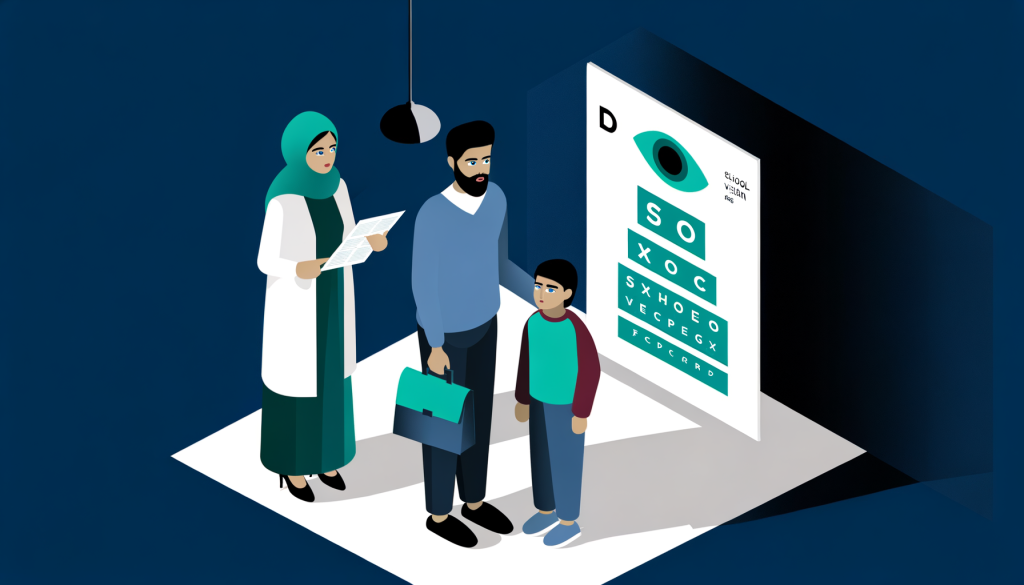
Failed School Vision Test in North York? A Parent’s Step-by-Step Guide to Diagnosis and Treatment
When a child fails a school vision screening it can be unsettling for families. A single screening result does not provide a diagnosis, but it does indicate the need for a careful follow-up. This guide explains practical steps parents in North York can take after a failed school vision test North York, what diagnostic tests may be recommended, and the common treatment options available for pediatric vision problems.
What a school vision screening measures – and what it doesn’t
School vision screenings are designed to identify children who may have reduced visual acuity, significant refractive error (like nearsightedness or farsightedness), or gross binocular vision problems. They are quick, low-cost checks performed by trained personnel or volunteers and are not intended to replace a full eye examination.
Because screenings are limited in scope, they can miss subtler issues (for example, early lazy eye or small-angle strabismus) and produce false positives due to temporary factors (fatigue, attention, or poor test conditions). When a student fails a screening in North York, the result is a prompt for diagnostic testing rather than an immediate diagnosis.
Step 1 – Stay calm and review the screening report
Begin by reading the screening feedback carefully. Typical notes will identify whether the issue was distance acuity, near acuity, or a concern about eye alignment. Record the date of the screening and any observations from the school (for example, if the child reported double vision or headaches). These details will be useful at the clinic visit.
Step 2 – Arrange a comprehensive pediatric eye exam
The next appropriate step is a comprehensive pediatric eye exam with an optometrist or ophthalmologist. In North York, clinics such as Fairlawn Eyecare provide pediatric eye exams and a range of diagnostic services tailored for children, including assessments for refractive error, binocular vision, and ocular health.
A full exam typically includes case history, visual acuity testing (distance and near), refractive assessment (often with cycloplegic drops for younger children), binocular vision testing, and an evaluation of ocular health using magnification and light.
Key diagnostic tests that may be recommended
- Cycloplegic refraction: Temporarily relaxes the focusing muscles with eye drops so the clinician can measure the true refractive error. This is important in children who may accommodate during routine testing.
- Retina scan or retinal imaging: High-resolution imaging of the back of the eye to identify structural concerns that are not visible through a basic exam.
- Corneal assessment: Checks corneal shape and surface, useful if there are signs of corneal disease or to evaluate contact lens options such as orthokeratology for myopia control.
- Binocular vision and stereopsis tests: Assess how the eyes work together, detect strabismus (eye turn) and amblyopia risk.
- Visual behavior evaluation: Observes reading speed, near work posture, and symptoms such as headaches or eye rubbing that may accompany vision problems.
Common causes for failing a school screening
Several conditions can explain a failed school vision test North York. Common causes include:
- Refractive errors such as myopia (nearsightedness), hyperopia (farsightedness), or astigmatism.
- Amblyopia (lazy eye) when the brain favors one eye and reduces input from the other, often developing in early childhood.
- Strabismus (eye misalignment) that interferes with binocular vision.
- Ocular surface disease or uncorrected allergies causing blurred vision or discomfort.
- Neurological or systemic conditions in rarer cases, which is why a thorough exam is important if symptoms are unusual.
Interpreting the exam results and next steps
After diagnostic testing, the clinician will explain findings and outline options. Typical outcomes and next steps include:
- Prescription eyeglasses: If refractive error is the cause, corrective lenses can restore clarity and often resolve school-related difficulties in attention and learning.
- Myopia control strategies: For progressive nearsightedness, measures such as specialized contact lenses, low-dose atropine, or behavioral strategies may be discussed to slow progression.
- Treatment for amblyopia: Patching the stronger eye or using atropine drops can improve vision in the weaker eye if started at an appropriate age and followed with regular monitoring.
- Treatment or referral for binocular vision disorders: Vision therapy or referral to a specialist may be suggested when convergence, tracking, or coordination problems are present.
- Monitoring and follow-up: Some findings require observation with scheduled rechecks to confirm stability or progression, especially in younger children.
Preparing for the clinic visit – what to bring and what to expect
To make the most of the visit, bring the school screening report, any existing spectacle prescriptions, and notes about symptoms observed at home or school (squinting, closing one eye, avoiding near work). The clinician may use drops for cycloplegic refraction and imaging equipment for retina scans; these procedures are routine and are used to ensure accurate diagnosis.
What parents in North York should know about timelines
Timely assessment is important, particularly for young children with amblyopia risk or rapidly progressing myopia. Many practices in the area can arrange an appointment within a few weeks of a screening failure. If the child reports eye pain, sudden vision loss, or double vision, seek assessment sooner.
Working with school staff and teachers
Communicate exam findings to the school so teachers know about any accommodations the child may need, such as preferential seating, enlarged print, or scheduled breaks for visual tasks. A formal eye report from the clinician can be helpful when the school is determining supports.
Broader child health considerations
Vision and oral health can both affect a child’s school experience. When coordination between health providers is helpful, families may consult community resources such as a community dental clinic in Toronto that provides information on pediatric oral health and clinic-level procedures for young patients.
Local resource note
Some parents prefer to look for clinics that offer pediatric-focused services such as retina imaging, corneal assessment, and myopia management in one place because it reduces repeat visits and provides cohesive documentation for school records. For related community health resources, parents sometimes review local pediatric care listings and family health directories or contact pediatric health networks for referrals to specialists or allied services such as pediatric dentistry and vision therapy providers. For example, families seeking nearby pediatric dental resources may refer to a local site listing pediatric dental services for context and background on what clinics provide in the region: pediatric dental services.
When to request a referral to a pediatric ophthalmologist
If the optometrist identifies structural eye disease, significant strabismus, very poor vision despite correction, or other findings that require medical or surgical assessment, a referral to a pediatric ophthalmologist will be recommended. Ophthalmologists manage surgical cases, complex ocular pathology, and some neurological causes of visual impairment.
Frequently asked questions
My child failed a vision screening but seems to see fine at home. Should I still get an exam?
Yes. Children often adapt to reduced vision and may not recognize how blurry their vision is relative to peers. A comprehensive exam will determine whether correction or monitoring is needed.
Are school vision screenings accurate for young children?
Screening accuracy improves with age and cooperation. For preschool and early elementary children, screenings are useful but more likely to produce false positives and negatives – which is why a failed screen should be followed by a full eye exam.
Will glasses fix every problem found after a failed screen?
Glasses correct refractive errors but do not treat all causes of vision problems. Amblyopia, binocular vision disorders, and some ocular health issues require additional interventions beyond spectacles.
Conclusion
Failing a school vision test North York is a cue for a structured clinical assessment rather than a final diagnosis. Parents should collect the screening information, arrange a comprehensive pediatric eye exam, and follow the diagnostic recommendations. With timely assessment and evidence-based treatments – from corrective lenses to amblyopia therapy and myopia management – many vision problems detected after a school screening can be managed effectively to support a child’s learning and development.
For families navigating follow-up, local multidisciplinary resources and pediatric-focused clinics can provide the necessary diagnostic tests, documentation for schools, and coordinated care plans.